Chassis
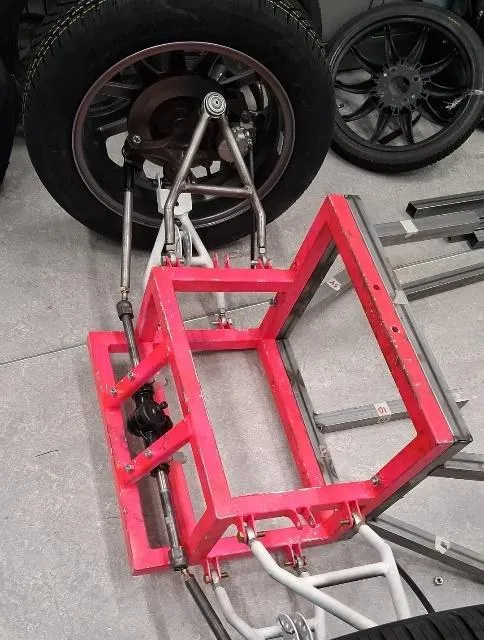
The car is built in three sections. We received the front and rear frames fully welded and the middle frame as labelled steel bars, which Summa students welded and assembled. The roll cage is part of the middle frame.
We combine mechanical engineering, electrical systems and modern manufacturing to recreate an early electric vehicle, and then drive it to Sweden.
We are mechanical and mechatronics engineering students at Fontys Technology. Since 2022, each year's team has picked up where the last one stopped, building a modern electric car in the shape of the 1902 Torpedo Kid.
This year we want to drive it for the first time, on a private road. After that comes Sweden.
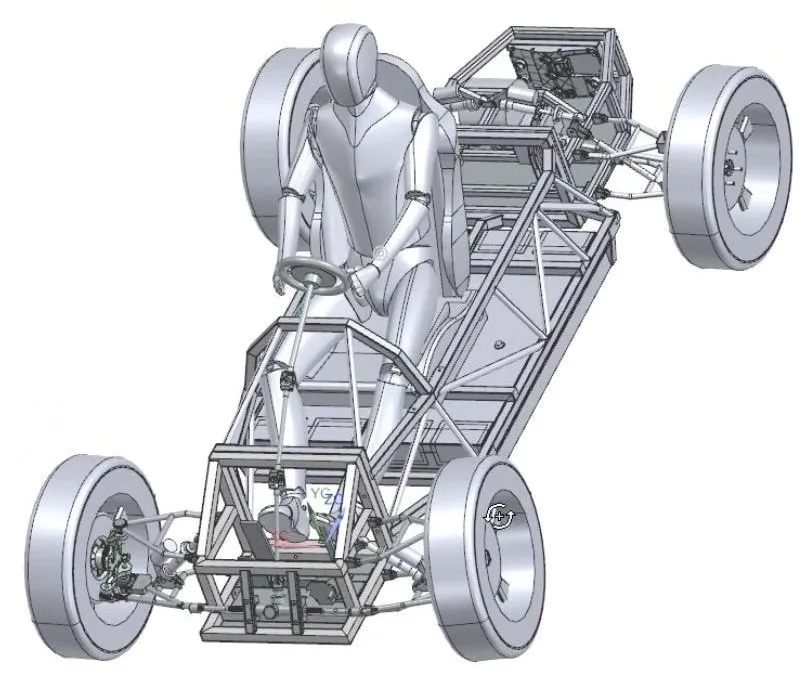
Design targets and estimates. The body is not shown.
The car is built in three sections. We received the front and rear frames fully welded and the middle frame as labelled steel bars, which Summa students welded and assembled. The roll cage is part of the middle frame.
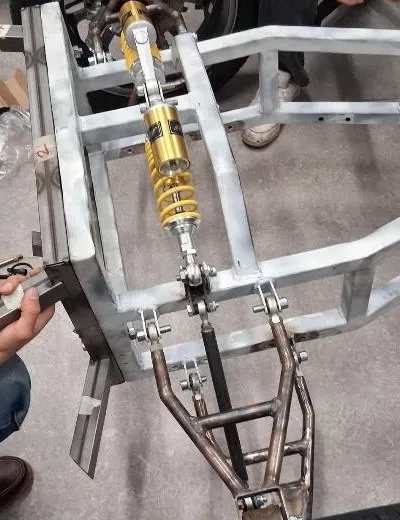
The coilovers we started with were too weak for the finished car. We calculated the loads for a 3 g hit and selected stronger ones. Next we check the full range of motion and work out the spring stiffness.
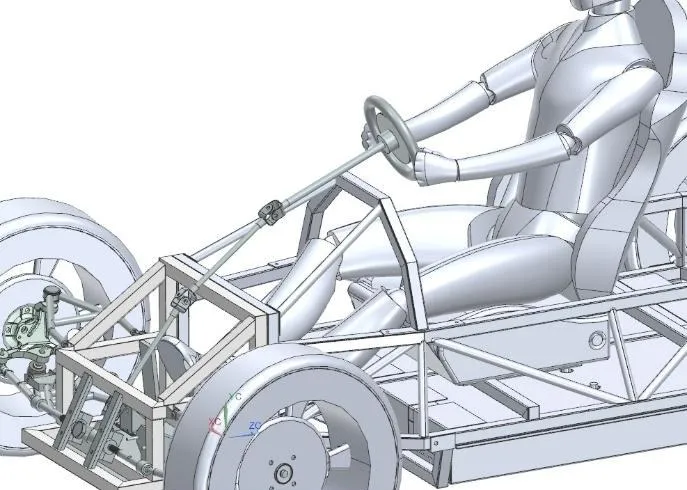
The steering wheel used to sit between the driver’s knees. We rerouted the column over the frame to bring it up to chest height, and chose a compact GT3-style rim. Next we make and install the parts.
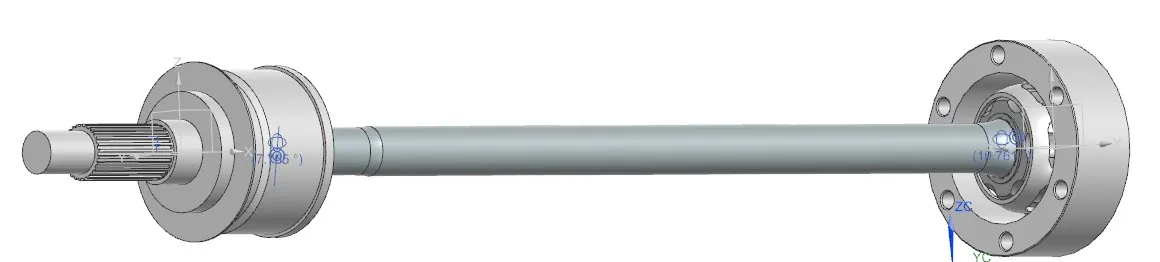
Standard shafts don’t fit our motor. We designed custom rear axles that keep the Mazda MX-5 joints at the wheels and use a different joint at the motor. Next we make them and test them through the suspension’s movement.
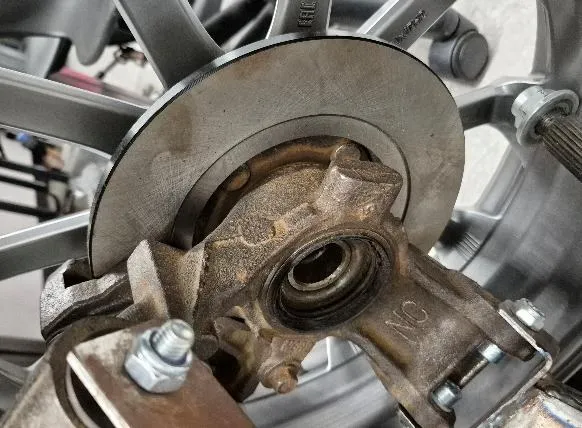
There is no room for a brake booster, so we designed a hydraulic system that works without one, using Mazda MX-5 calipers. Our calculations show too much braking at the front for this car’s weight, so we are adjusting the balance.
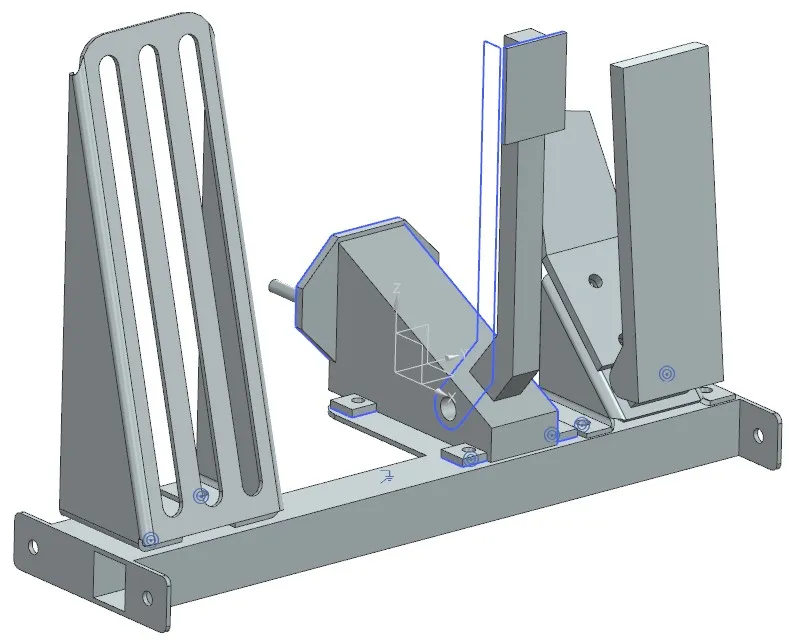
The pedal box holds an electric throttle, a floor-mounted brake pedal and a footrest, and has to clear the steering shaft. The design is done, with a steel main bracket. Next we make and install it.
Two battery modules run in parallel at about 94 volts. A management system watches the cells, and the parts talk over one shared CAN network. Next we choose the last components and finish the network before wiring the car.
We found a suitable BMW radiator and are testing the idea of a heatsink under the batteries. The first heatsink design was too large, so we are making it smaller and working out how the two fit together.