One car, built by a new team each year
Our goal this year is to drive the Torpedo Kid on a private road. The long-term goal is Sweden.
The project so far
- 2022–23First concept, requirements and CAD designs.
- 2023–24Front and rear frames built, with the motor in place at the back. Rack-and-pinion steering chosen.
- 2024–25Middle frame designed, with the batteries under the driver.
- 2025–26Parts built and assembled, and the frame put together in CAD.
- 2026–27This year: make the car driveable on a private road.
The car
- Seats
- One
- Motor
- 15 kW, rear-wheel drive
- Battery
- 36 kWh in two modules
- Estimated range
- 180 to 240 km
- Top speed
- 80 km/h or more
- Weight
- Under 450 kg without battery
- Suspension
- Double wishbones
- Vehicle class
- L7e heavy quadricycle
Design targets and estimates. See what we are working on now.
Safety
We design to the European rules for heavy quadricycles, with a roll cage, seat belts, two separate brake circuits and an emergency kill switch.
The battery is designed to sit in a sealed steel box. Pressing the emergency stop is designed to cut the high-voltage battery through a hardwired line and send a shutdown message to the rest of the car, while the lights stay on.
Where the shape comes from
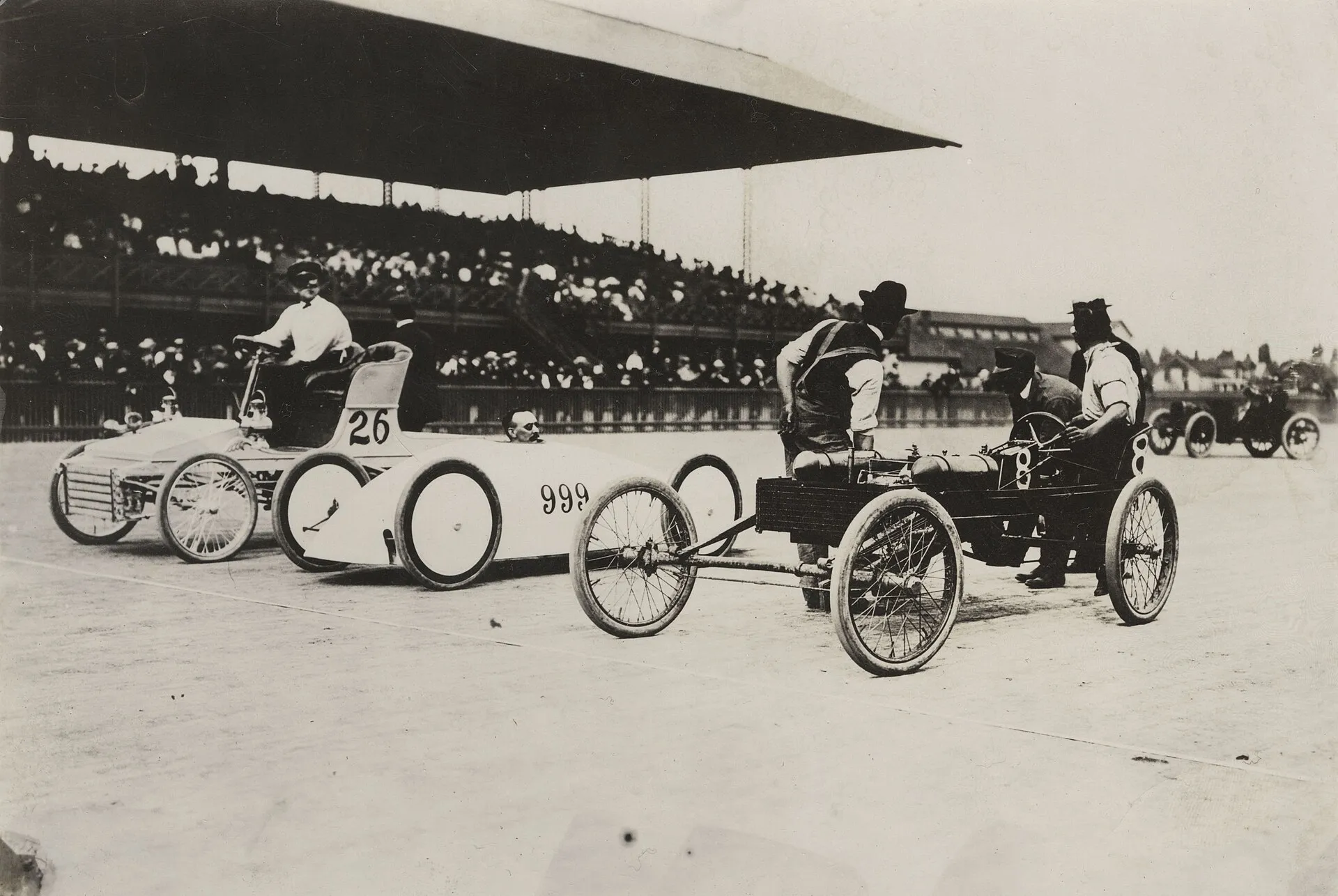
Walter Baker built two electric racers called Torpedo Kid in Cleveland in 1902. They were white, waist high and had one seat.